 TEXTILES.ORG




“Tall” Mechanically Stabilized Earth Walls (MSEW) are sometimes required in circumstances in which projects require large grade separations.
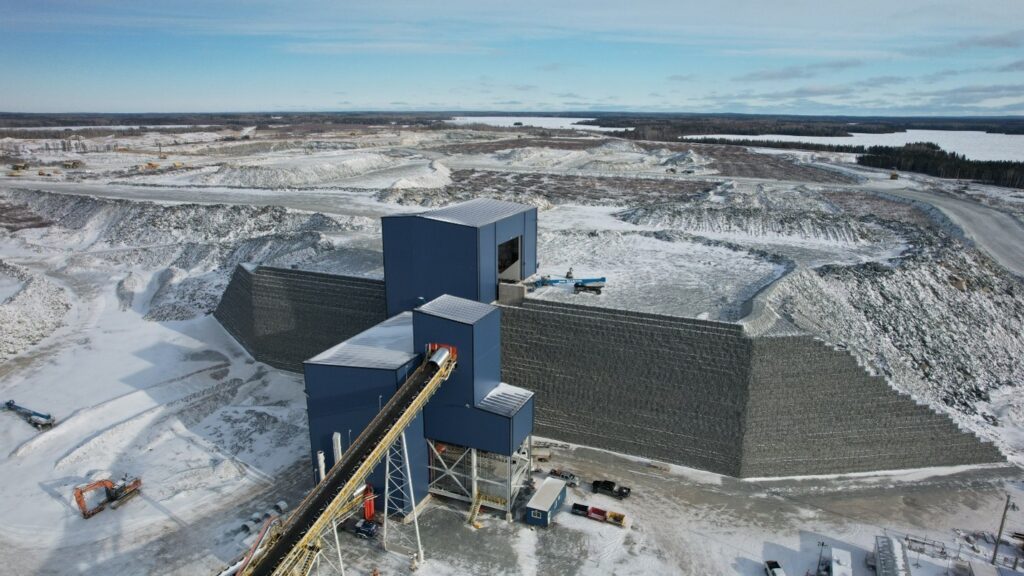
What is considered “tall” in relation to MSE walls? In the United States most MSEWs typically range in height from 10 to 30 feet, which is consistent with the support of highway embankments and abutments. Taller walls are typically required in mountainous terrains, highway projects, mining crusher access and other applications. When used, these structures require more rigorous consideration when it comes to their design and construction.
In the United States, the tallest steel reinforced MSE wall is 140 feet. It supports the embankment for the construction of the 3rd runway at the Seattle-Tacoma Airport. Internationally, the geosynthetic reinforced walls at Dubai Fujairah Freeway were nearly 200 feet tall in a 3-tier configuration. In India, there is a multi-tier MSE structure which is over 250 feet.
There are also MSE walls that support approach embankment for mine crushing operations in the United States as well as internationally which exceed 60 feet. These walls also support mining dump trucks which can impose significant loads.
There are many other case studies available demonstrating the ability to design and construct tall geosynthetic reinforced MSE structures which exceed the typical height of 30 feet. These height limitations are generally imposed since most walls fall in this range and have performed well in addition to being economical to construct. Therefore, engineers are comfortable in accepting these structures by following well established design and construction practices.
Taller walls are generally allowed but may require more rigorous design and modeling considerations to be approved. Design considerations for MSEW taller than 30 feet include:
- Foundation support: Examine if the foundation can support the applied bearing stress, analyze wall settlement for total and differential settlement and evaluate if there is a need for foundation soils to be improved.
- Design of internal and external drainage systems to accommodate the site conditions: Water is typically associated with the cause or the trigger event causing poor performance.
- Backfill material properties and behavior under load: The selection of backfill material is critical to improve shear strength and performance.
- Reinforcement strength, durability, spacing and length impact all aspects of stability of the MSEW.
- Facing selection and details needs to accommodate expected deformations and durability over time. These walls have been constructed with concrete panels, blocks, gabions, wire and geosynthetic wrapped welded wire faces. Consideration of backfill compression relative to facing is important.
From a technical perspective, tall walls can be designed to address the project height and load requirements by carefully addressing these design considerations. They also need to be constructible. The design needs to be properly executed to meet the design objectives. Some construction items that need to be considered and inspected:
- Foundation preparation: Confirmation that the foundation materials are as expected by the design including strength and stiffness. Typically, a proof roll test is conducted to identify any potential soft spots that should be excavated and improved. Alternatively, intelligent compaction could be used to more rigorously identify the site variability and address soft and hard spots relative to the expected design.
- Selection, placement and compaction of the reinforced backfill materials: Material gradation helps improve material strength, weight and expected performance. Adherence to the lift height, compaction and densification requirements is critical to the MSEW performance.
- Wall alignment control should be consistently checked and corrected as needed during construction. It is much more difficult to correct after the wall is completed.
- Inspection and enforcement of specifications and design details is critical in achieving the expected performance. Construction tolerances stated in the specification should be checked and corrected as necessary. Wall height can amplify small errors in wall alignment.
In conclusion, geosynthetic reinforced MSEWs which exceed 100 feet are feasible and can be constructed economically with careful attention to design and construction details. As wall heights increase performance risk is amplified.
A successful project includes detailed understanding of the subsurface conditions, comprehensive design, appropriate selection of materials including backfill and facing, and quality control and adherence to specifications during construction. These considerations help ensure that MSEWs perform as intended through their design life.
Daniel E. Alzamora, P.E., is a contributing editor for Geosynthetics and has spent more than three decades in the geosynthetics industry in both the public and private sectors.