 TEXTILES.ORG




One of the largest and important transportation assets of the United States is our roadway system which allows for movement of commerce and people. Having a system that performs well is crucial to the economy and safety of the public.
Our current design practice generally targets a pavement design life of 20 to 40 years depending on the type of roadway and volume of traffic. In recent years, there has been a push to increase the design life out to 100 years by the Federal Highway Administration, Transportation Research Board and organizations such as the National Road Research Alliance.
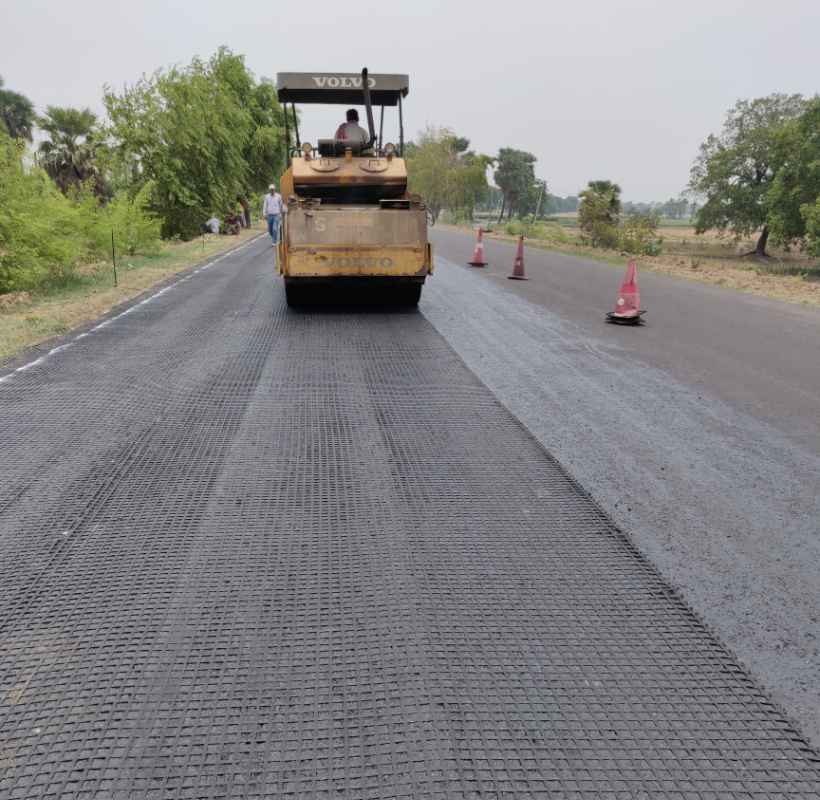
Our roadways are generally composed of a surface layer which can be gravel, asphalt, or concrete. The surface layer rests on the pavement foundation which is composed of several layers of soil layers including the existing subgrade which provide support to the riding surface. One of the ways design life can be increased is to improve the pavement foundation design so that its performance through time is consistent.
The pavement design relies on the strength, stiffness and drainage capabilities of the foundation layers which can deteriorate over time. These changes are due to changes in moisture content and gradation of the foundation layers. These changes can reduce the permeability, strength and stiffness of the material causing the support of these layers to deteriorate over time. Geosynthetics materials such as geotextiles and geogrids as well as drainage products can be used to protect and/or enhance the performance of the pavement foundation.
Geosynthetics have been used for pavement applications for decades but in my opinion these materials are still underutilized given the potential benefits these products can provide compared to their cost.
Properly designed and installed geosynthetics can maintain separation between native soils and the granular layers that are designed and specified to support the surface layers. These granular layers also continue to allow the free flow of water through the section and the natural existing subgrade soils. This is important because the strength and stiffness that the pavement design relies on can deteriorate as clay and silt particles migrate to the foundation materials.
Also, it is important to allow water to continue to flow so that hydrostatic pressures do not build up, causing a reduction in strength. This basic function (filtration/separation) of geotextiles could be a minimum standard in many situations when new, or reconstruction of a roadway section is considered.
In addition, geogrids and/or geotextiles can be used to reinforce the pavement foundation soils. In this application, the geosynthetic confines and restrains the soil particles from lateral displacement. This improves the response of the granular materials used for the pavement foundation which can allow a reduction in pavement thickness, increase the life or a combination of both.
In this application, geosynthetics can also improve the uniformity of the pavement behavior across variable subgrade conditions. The stiffer layer response helps distribute the pavement loads and bridge over variable conditions. This is an important contribution of these materials to improving the design life of the overall section. Another opportunity is to improve drainage. There are several types of geosynthetics which will improve the ability of the section to drain along the edges as well as across the section. Water can reduce the strength of the materials as well as contaminate the gravels with fine grained soil.
In summary, geosynthetics have an important role in the goal of extending the design life of pavement structures. This is recognized as an important consideration in improving overall condition of the transportation infrastructure, which can improve public safety while reducing life cycle costs, maintenance and congestion.
Additional information:
- https://onlinepubs.trb.org/onlinepubs/circulars/ec296.pdf
- https://www.youtube.com/watch?v=Kg1luJNBbm0
- National Highway Institute Courses:
- Geotechnical Aspects of Pavements No. 132040
- Geosynthetic Course No. 132013
- Geosynthetic Design & Construction Guidelines, FHWA-NHI-07-092
- AASHTO Course – Geosynthetic Materials: Fundamentals
Daniel Alzamora, P.E., is a contributing editor for Geosynthetics and has spent more than three decades in the geosynthetics industry in both the public and private sector.