 TEXTILES.ORG




There are many geotechnical solutions when needing to construct over soft unstable ground.
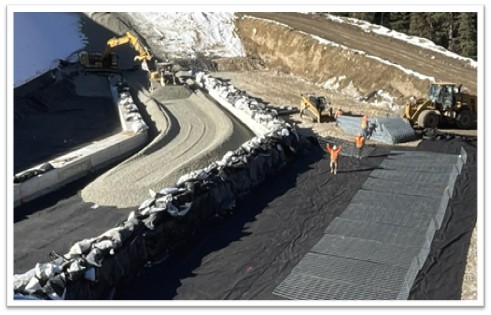
These solutions range from a simple option such as allowing a surcharge to consolidate the soil layers over time to more complex technologies that fully support the load on a series of columns transferring the load through the columns to a firm layer below.
The selection of which option is best for a given project is a consideration between cost and time, although other items such as constructability, risk and experience will also influence the decision. Typically, more complex solutions reduce construction time but have higher costs.
There are many solutions which balance cost of time and money, for example utilizing geosynthetics to help distribute the load can allow the designers to increase construction rates with minimal costs. Another option is to utilize lightweight fills which can be used to reduce or eliminate the load, eliminating the need to do additional ground improvement below grade. These solutions can reduce construction time and minimize construction risk. In recent years combining the use of lightweight fills and geosynthetics has become an efficient and cost-effective option when constructing on soft and compressible soils.
The combination reduces the demand from the load of the embankment while increasing site stability. The typical lightweight materials that have been utilized that are in these applications are foamed glass aggregate, cellular concrete and expanded shale aggregate. These materials can be combined with geotextiles and geogrids to form a composite reinforced soil mass. The lightweight material reduces the load while the geosynthetics confines the fill while increasing the stability of the system. This combination has the potential to eliminate or reduce the need to improve existing foundation conditions. This can typically reduce construction risk and costs associated with this type of construction.
Another application in which these materials work well together is in the construction of earth retention such as a mechanically stabilized earth (MSE) wall or embankment. The lightweight fill materials reduce the overall lateral earth pressure while the geosynthetic reinforcement confines and provides tensile strength within the fill. There are several applications in which this combination of technologies can be beneficial. The following are a couple of examples.
First, in conditions where seismic loads are impacting the design of the overall system, the reduced weight reduces the inertial force generated by the structure in addition to the bearing stress on the foundation soils.
Second, embankment construction over existing utilities or structures. A reinforced embankment is sometimes needed to be constructed over existing infrastructure. The new load and associated deformations can’t be tolerated by the existing features. The combination of the lightweight reinforced fill can help reduce or eliminate the loads while helping to distribute the deformations across the features reducing the risk of damage.
Both technologies work very well independently and have a long history of performance. In some cases, the combination of these technologies has the potential to deliver more efficient projects.
Additional information:
- GeotechTools.org (https://www.geoinstitute.org/geotechtools/)
- Geotechnical Engineering Circular No. 13 Ground Modification Methods Reference Manual
- Volume I – FHWA-NHI-16-027 (https://www.fhwa.dot.gov/engineering/geotech/pubs/nhi16027.pdf)
- Volume II – FHWA-NHI-16-028 (https://www.fhwa.dot.gov/engineering/geotech/pubs/nhi16028.pdf)
- National Highway Institute (NHI) Course 132034 (https://fhwanhi.geniussis.com/RegistrationByCourse.aspx)
Daniel Alzamora, P.E., is a contributing editor for Geosynthetics and has spent more than three decades in the geosynthetics industry in both the public and private sector.