 TEXTILES.ORG




Tailings, the residual byproducts of mining operations, present one of the most formidable challenges in modern resource extraction. These materials hold little economic value but carry substantial environmental risks if not managed properly. The sheer volume of tailings generated globally, often millions of tons annually, demands storage solutions that are not only safe and environmentally sound but also economically viable.
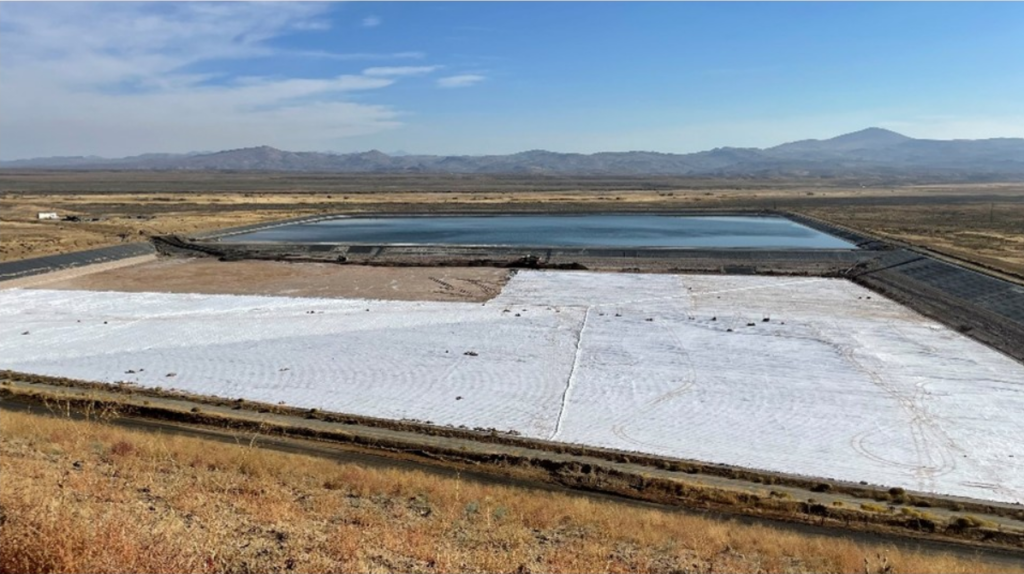
Tailings storage facilities (TSFs) are designed to contain these waste materials. They come in various forms, from massive embankment dams to smaller lined ponds, each tailored to the specific needs of the mining operation. However, the most common method of tailings disposal involves pumping slurry (a mixture of tailings and water) into these facilities. While this approach is relatively inexpensive, it introduces significant risks. The high water content in slurry increases the potential for liquefaction, a phenomenon where solid materials begin to behave like a liquid, often leading to catastrophic dam failures.
The consequences of such failures are stark and well-documented. In 2019, the collapse of the Brumadinho dam in Brazil released a torrent of tailings that killed 270 people and devastated the surrounding ecosystem. Similarly, the Mariana dam failure in 2015 and the Mount Polley spill in 2014 underscored the urgent need for safer, more reliable tailings management practices. These disasters not only resulted in tragic loss of life but also caused long-term environmental damage, contaminating rivers, soil and groundwater with heavy metals and toxic chemicals.
Beyond the human and ecological toll, the economic implications of TSF failures are profound. Mining companies face substantial financial penalties, legal liabilities and reputational damage. As a result, there is a growing imperative within the industry to develop tailings storage solutions that mitigate these risks while remaining cost-effective.
The limitations of conventional dewatering methods
Dewatering tailings, i.e. removing excess water before storage, is widely recognized as a key strategy for improving the safety and efficiency of TSFs. By reducing water content, dewatering minimizes the risk of liquefaction, decreases the volume of material that must be stored, and allows for the recovery and reuse of process water. However, traditional dewatering methods come with significant drawbacks.
One such method is dry stacking, which involves mechanically dewatering tailings using vacuum or pressure filters before placing them in a TSF. While dry stacking produces the most stable tailings, it is also the most expensive and energy-intensive option. The high capital and operating costs of filtration equipment make this method less accessible for large-scale operations, particularly in regions with limited infrastructure.
Another approach is thickening, where polymer flocculants are added to tailings slurry to accelerate the settling of solids. While thickening reduces water content, it does not eliminate the need for large storage volumes. Additionally, the use of chemical additives can introduce new environmental concerns, particularly if these chemicals leach into surrounding ecosystems over time.
A third method, gravity-based dewatering, relies on geosynthetic materials to separate water from tailings. Traditional geocomposites, such as geonets and geotextiles, have been used for this purpose but face several challenges. Under the high compressive loads found in large TSFs, these materials can become compressed, reducing their drainage capacity. Fine particles in tailings slurry can also clog geotextile filters, further impairing performance. Finally, the acidic or alkaline conditions often present in mining environments can degrade geosynthetic materials, limiting their long-term effectiveness.
These limitations have driven the development of multilinear drainage geocomposites (MLDGs), a new class of geosynthetic materials designed to overcome the shortcomings of traditional dewatering methods.
Multilinear drainage geocomposites
Multilinear drainage geocomposites (MLDGs) represent a significant advancement in tailings management technology. Unlike traditional geocomposites, which rely on planar drainage layers, MLDGs feature a tubular drainage core that resists compression and maintains high flow capacity even under extreme loads. One example of this technology is the Draintube system, developed by Afitex-Texel.
The Draintube system is composed of three components:
- A nonwoven polyester/polypropylene geotextile filter, which retains fine particles while allowing water to pass through.
- A series of corrugated perforated polypropylene mini-pipes, spaced at regular intervals, which provide high-capacity drainage channels.
- A protective geotextile cushion, that improves the mechanical properties of the product and prevents damage to the underlying geomembrane.
This design offers several advantages. The tubular structure of the drainage core distributes compressive loads more evenly, preventing the deformation that often plagues planar geocomposites. Additionally, the large drainage channels reduce the risk of clogging by fine particles, while the materials used in the system are selected for their resistance to acidic and alkaline environments.
Performance under high compressive loads
One of the most critical challenges in tailings management is the compressive stress exerted by the weight of stored tailings. In large TSFs, these stresses can exceed 2 MPa, causing traditional geocomposites to lose their drainage capacity due to geotextile intrusion into the drainage core and the core compression itself. This reduction in transmissivity can lead to saturation and instability within the TSF.
The Draintube system addresses this issue through its unique tubular design. The corrugated mini-pipes create an arching effect, transferring compressive loads to the surrounding tailings and preventing deformation of the drainage core. Research conducted by Saunier et al. (2010) demonstrated that the Draintube transmissivity remains unaffected by compressive stresses up to 2.4 Mpa, making it an ideal solution for large-scale TSFs. By maintaining drainage capacity under high loads, MLDGs like Draintube can significantly reduce the risk of TSF failure, improving both safety and operational efficiency.

Behavior in acidic leaching environments
Many mining operations rely on acid leaching, particularly with sulfuric acid, to extract valuable metals from ore. This process creates highly acidic conditions that can degrade geosynthetic materials over time. Traditional geotextiles, for example, may lose strength or become clogged when exposed to low-pH environments, compromising their performance and longevity.
To evaluate the Draintube system’s resilience in such conditions, researchers conducted a 90-day leaching test. The test involved installing Draintube in cells containing crushed copper ore with a 3% copper grade. A normal stress of 100 kPa was applied to simulate real-world conditions, and a sulfuric acid solution with a pH of 1.4 was recirculated through the system at a rate of 15 liters per hour per square meter (Blond et al., 2014).
Results show that the flow rate through the system remained constant throughout the test, indicating that no clogging occurred. Visual inspections confirmed that the mini-pipes stayed clear of particles, and permeability tests on the geotextile filter (in contact with the ore) showed only decrease in permeability in the range of 10%, a negligible reduction that suggests the system can operate effectively in acidic environments.
These findings are particularly significant for mining operations that rely on acid leaching. By demonstrating that MLDGs can withstand harsh chemical conditions without significant performance degradation, the system offers a practical solution for tailings management in a wide range of mining contexts.
Filtration compatibility with tailings slurries
Tailings slurries often contain high concentrations of fine particles, which can clog geotextile filters and reduce drainage efficiency. To assess the system’s ability to handle such materials, researchers developed a modified gradient ratio test based on the ASTM D5101 standard. This test simulates the interaction between tailings slurry and the geotextile filter, providing insights into the system’s long-term filtration performance.
The test procedure involved several key steps:
- Slurry preparation: A tailings slurry with a 28% solids content was deposited onto the geotextile filter.
- Sedimentation phase: The slurry was allowed to settle, mimicking the conditions inside a TSF.
- Hydraulic gradient application: A constant hydraulic head was maintained to measure flow rates and permeability over time.
Results show that initially the permittivity of the system decreased slightly due to the accumulation of fine particles on the geotextile surface. However, this value stabilized over time, indicating that no long-term clogging occurred. The gradient ratio, a key indicator of filtration performance, remained consistent at around 3, further confirming that the geotextile filter was not becoming blocked (Blond et al., 2018).
Most importantly, the permeability of the tailings/geotextile system was measured at 6 x 10⁻⁵ cm/s, which closely matches the permeability of the native tailings. It can be concluded that the tested geotextile, with a FOS of 70 µm (maximum average value as measured per CGSB 148.1 n°10) offers a good filtration performance of the tailing with the given particle size distribution, prepared as a 28 percent solid/72 percent water slurry during both sedimentation and filtration under a hydraulic gradient of 1.0.
The broader implications for tailings management
By addressing the limitations of traditional geocomposites—particularly their susceptibility to compression, clogging and chemical degradation—MLDGs offer a safer, more efficient, and cost-effective solution for dewatering tailings.
The potential benefits of adopting MLDGs are far-reaching. For mining companies, these systems can reduce the risk of TSF failures, thereby minimizing the potential for environmental damage and legal liabilities. They also offer operational advantages, such as reduced storage volumes and improved water recovery, which can translate into significant cost savings over time.
From an environmental perspective, MLDGs contribute to more sustainable mining practices. By improving the stability and safety of TSFs, they help protect surrounding ecosystems from contamination. Additionally, the ability to recover and reuse process water reduces the industry’s overall water consumption—a critical consideration in water-scarce regions.
Conclusion: A path forward for safer tailings storage
Tailings management presents a series of complex challenges, requiring solutions that carefully balance safety, operational efficiency and environmental responsibility. In this context, multilinear drainage geocomposites offer notable progress, providing a viable alternative to conventional dewatering techniques.
Thanks to their ability to maintain performance under high compressive loads, resist chemical degradation in acidic environments, and effectively filter fine tailings particles, MLDGs help overcome several limitations in tailings storage.
References
Saunier, P., Ragen, W., and Blond, E., “Assessment of the Resistance of DTPG to High Compressive Loads,” Proceedings of 9th International Conference on Geosynthetics, 2010, Brazil
Blond, E. and Saunier, P., “Laboratory Evaluation of the Performance of Tubular Drainage Geocomposites for Ore Filtration and Acid leachate Collection”, Proceedings of Geosynthetics Mining Solutions, 2014, Canada
Blond, E., Saunier, P., Dolez, P., “Filtration of oil sands tailing slurries”, Geosynthetics Magazine, October November 2018 Saunier, P., Fourmont, S., Mlynarek, J., Jung A., “Successful tailings dewatering design using multilinear drainage geocomposites”, Mining Engineering Magazine, June 2022