 TEXTILES.ORG




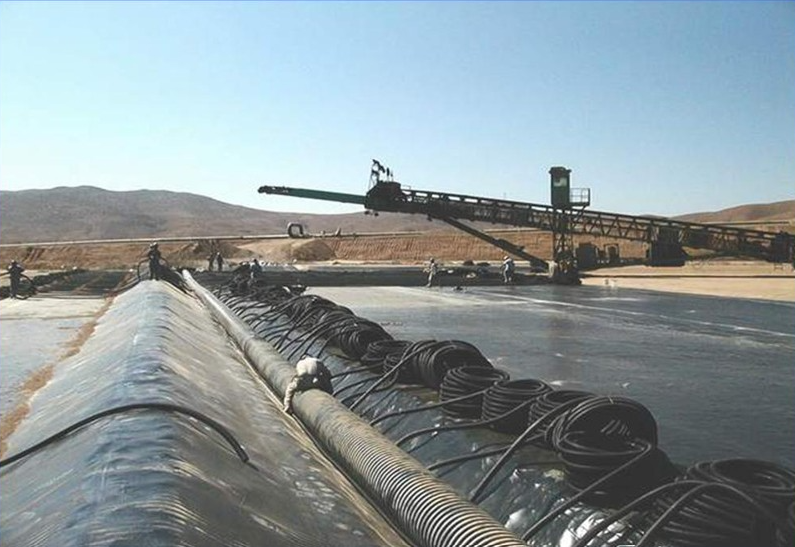
The demand for minerals that are being extracted continues to grow and mines need to work efficiently and safely while minimizing the impact on the environment. Mine operations typically involve large excavations and embankments, access roads, processing and extraction of materials, disposal of waste, and many others while operating large heavy equipment with a demanding schedule.
Geosynthetic products are indispensable in the ability to quickly construct and maintain the infrastructure that mines require to deliver their products.
There are four key areas where geosynthetics are critical.
- Containment of liquids and chemical processing
- Managing storage of tailings
- Infrastructure and stabilization
- Remediation and closure
To address these areas there are a series of types of geosynthetics that can deliver the required functions, for example:
- Geomembranes and Geosynthetic Clay Liners (GCL) are used as a barrier to liquids from tailings dams and leach pads.
- Geotextiles are used as a filter or as puncture protection of liners. For example, as a filter when dewatering tailing dams or to protect a liner from being punctured due to the aggressive conditions of the site.
- Geogrids are used for constructing embankments, haul roads and retaining walls.
- Geocomposite products are a combination of a drainage net bonded to geotextiles typically on both sides which provide drainage paths for liquids.
One of the most critical applications for mining is the use of geomembranes and GCLs as a liner for leach pads and in tailings dams. In leach pads, typically a high-density polyethylene (HDPE) liner is used under an area where crushed ore is stacked and sprayed with a chemical solution which extracts the metal, for example gold and copper.
As the liquid chemical is used to extract the mineral from the ore it is important to be able to collect the leachate from this process which contains the metal as well as to prevent the ground from contamination. In this application a thick layer of non-woven geotextile is placed over the geomembrane for protection from the sharp ore being stacked on top.
Mine tailings are the waste produced from the process. This waste is stored and retained by dams which typically incorporate GCLs to minimize seepage of the contaminated liquid. In addition, geotextile tubes and geogrids are used to help stabilize and dewater the tailings. In this application, geosynthetics are there to help extract the product and manage the waste while helping to protect the environment through hydraulic and structural solutions.
To transport and process the materials, geosynthetics help in the construction of roads, embankments, and retaining walls. These structural solutions are impacted by heavy loads, difficult weather, and aggressive materials. The primary types of products used are geogrids, geotextiles, and drainage composites. These solutions allow the efficient operation of the site as needed for the operations.
Geosynthetics are also used to properly close the mining site at the end of operations. Geosynthetics are used to construct covers for waste materials and tailings storage. This typically involves installing multiple layers of different products such as a liner, drainage composites and soil reinforcement. Properly capped areas help minimize the environmental impact of this site.
Geosynthetics make an important contribution to the operation of mines. They provide a structural option for the efficient construction of the infrastructure, as well as providing a comprehensive solution to manage the mining products, contain the waste, and to safely close the site.
Daniel E. Alzamora, P.E., is a contributing editor for Geosynthetics and has spent more than three decades in the geosynthetics industry in both the public and private sectors.
For additional information:
- Geosynthetic design and construction approaches in the mining industry, https://www.sciencedirect.com/science/article/abs/pii/S0266114406000914
- Geosynthetic Institute (GSI), https://geosynthetic-institute.org/
- Designing with Geosynthetics by Robert Koerner, 5th edition