 TEXTILES.ORG




Rural communities in remote mountainous regions have very limited access to roads. They also have very limited alternative routes that are in many cases very long detours.
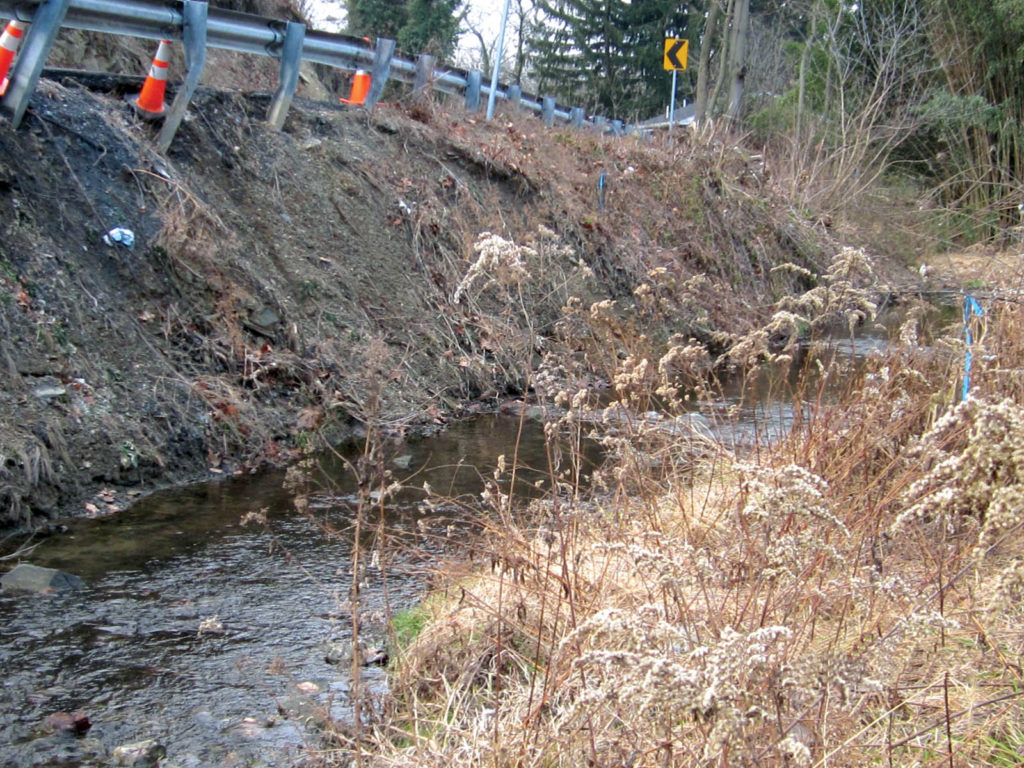
These roads are critical lifelines for emergency vehicles, tourism, commerce, schools and general connectivity for these communities. The loss of access due to roadway closures can significantly impact the local communities.
Engineering these routes can be extremely challenging. The designers and contractors typically must deal with steep slopes, rain, complex geology, and remote locations with long haul distances.
One of the hazards that develop on these roads over time are soft shoulders or edge failures which are generally a function of the local geology, materials used for the embankment, steepness of the slope, and erosion. These can manifest as sloughing or depressions of the road along the edge and can be hazardous to the traveling public. In addition, these shallow depressions along the road develop cracking of the pavement which allow more water to enter the slope and develop into a much larger slope failure.
Therefore, addressing these shallow soft shoulder conditions through proactive maintenance can in some cases minimize or delay the development of deeper more complex failure conditions, which would typically require costly solutions such as large excavations, import of high quality backfill, and retaining walls.
Geosynthetics can in many cases offer a cost effective and sustainable solution that could typically be designed and constructed faster with a shorter construction window reducing the downtime for the road. Any design would need to address water management and stabilization of fill on a steep slope. Geotextiles and composites are typically used in combination with drainage pipes to provide drainage paths for internal and external water. Geogrids and geocells are typically used to reinforce a steep slope and provide confinement of the fill. Erosion products are also incorporated to address surface erosion concerns.
In remote and mountainous terrain geosynthetics add a lot of benefits:
- A reinforced steep slope reduces the volume of fill material needed to reconstruct the shoulder.
- The reinforced slope can also reduce the ecological impact by requiring a smaller footprint.
- Drainage composites and geotextiles enhance the constructability and performance of the slope.
- Geosynthetics can reduce the construction time and cost.

The Federal Lands Highway Division of the Federal Highway Administration (FHWA) developed a design and construction technique to address these conditions entitled “Deep Patch Repair.” It was originally developed for the U.S. Forest Service, which needed an efficient tool that could address these conditions through their maintenance program. This procedure is limited to shoulder instability that can be addressed in the upper 6-ft. It requires the soft material to be excavated and replaced with granular fill and geosynthetic reinforcement which is closely (<12-inches) spaced. This solution creates a composite reinforced soil mass which serves as a bridge over softer deposits. This composite layer helps redistribute vertical traffic loads minimizing cracking and reducing slope movement. In some cases, this is treated as a short-term solution since it might not be able to address the overall instability of the site.
In remote mountainous areas innovative solutions are sometimes needed which reduces material excavation and hauling while delivering a structurally sound solution which minimizes the impact on the local environment. Geosynthetics allow creative solutions based on research and sound engineering. It is important for all parties to understand the limitations of these solutions which may differ from site to site. The use of geosynthetics in combination with the Deep Patch procedure is a good tool for consideration when addressing these conditions.
Daniel E. Alzamora, P.E., is a contributing editor for Geosynthetics and has spent more than three decades in the geosynthetics industry in both the public and private sectors.
For additional information:
- Cuelho, Perkins, Akin. (2012). “Deep Patch Repair, Phase I: Analysis and Design”, Montana State University – Western Transportation Institute, Department of Transportation. Federal Highway Administration. Western Federal Lands Highway Division, Report Number: FHWA-WFL/TD-12-00. https://rosap.ntl.bts.gov/view/dot/59904
- Collins, B. M. (2015). “Design considerations for deep patch embankment repair with geosynthetics.” Transp. Res. Rec.: Jour. of the Transp. Res. Board, No. 2473, 224–232. https://dx.doi.org/10.3141/2473-26