 TEXTILES.ORG





Business leaders continually explore new ways to recruit and retain workers. This is especially true in the textile industry in regard to drawing in younger people who may not be knowledgeable about the industry and its employment offerings.
“There is a demand for skilled and qualified people, both at the shop floor and at the laboratory level and research level,” says Seshadri Ramkumar, Ph.D., professor of chemical countermeasures and advanced materials at Texas Tech University in Lubbock, Texas. “But the problem is there is no feed because students, particularly domestic students, are not showing much interest in getting into paper science or textiles.”
Camari Henderson, owner of Camari Henderson Design in Vallejo, Calif., also sees an increase in demand for skilled workers in textiles. “The tailors of the world, the seamstresses of the world, at this point, they are aging out, but the jobs are still there,” she says.
Part of the problem is competition. Top students, Ramkumar says, choose to go into fields such as medicine or other areas. “Our industry cannot compete with the startups, particularly in AI [artificial intelligence], biotechnology, pharmaceuticals.”
As a result of this competition, Ramkumar and others are engaging with students—from elementary school to postsecondary—to show them that the textile industry is a rewarding area full of opportunities.
Textiles can be an exciting and challenging field. Ramkumar, who supervises the Nonwoven and Advanced Materials Laboratory at the university and who is a frequent contributor to Specialty Fabrics Review, says the areas with the greatest potential for young people in textiles are defense, human health and other advanced fields such as environmental protection, including water purification.
“These are the areas where there are opportunities at the shop floor level as well as the R&D level and marketing level,” says Ramkumar.
Ramkumar is dedicated to connecting with middle and high school students about research opportunities in science, technology, engineering and mathematics (STEM). The Nonwovens and Advanced Materials Laboratory at Texas Tech University frequently hosts students and other individuals for research events and workshops.
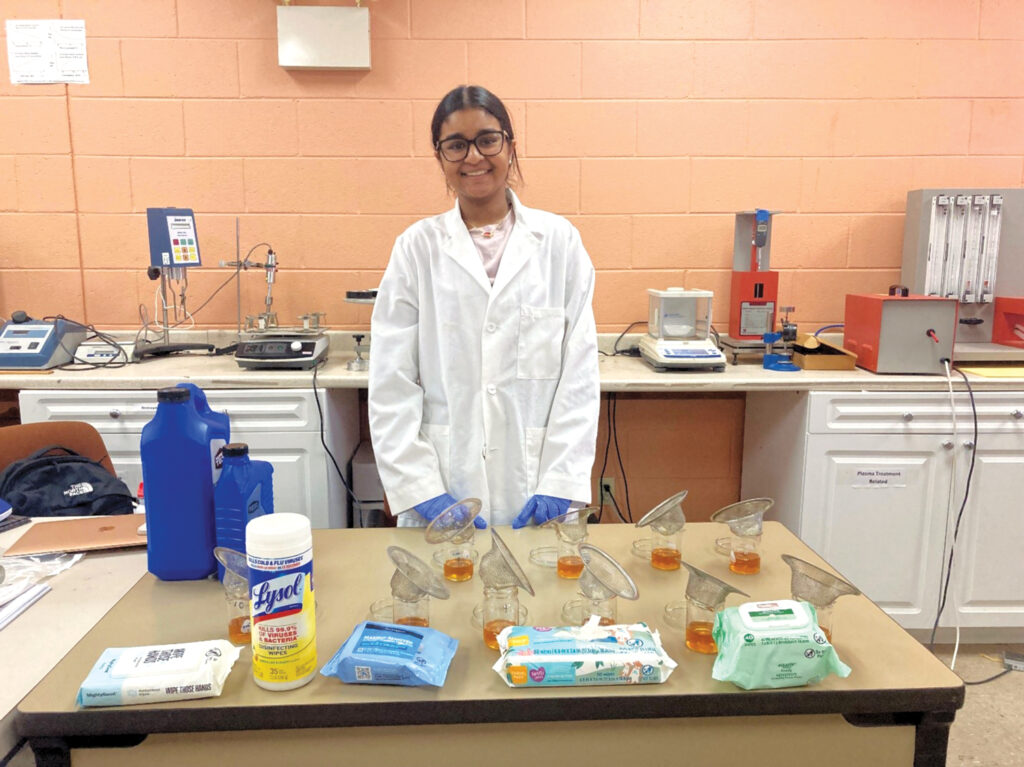
For example, in 2023, Ramkumar hosted various students and provided hands-on experiments to test cotton as an oil absorbent. The students discussed the sustainability of the material and its environmental protection applications. A seventh grader from Hutchinson Middle School participated and shared the group’s findings in a presentation in January 2024 at Ramirez Elementary School at the school’s annual STEM Night. The annual event is designed to expose pre-K through fifth-grade students to opportunities in STEM, and Texas Tech University was one of 19 exhibiting booths.
Another participant, Nandhanaa Anand, a 10th grader from Lubbock High School, continued working with Ramkumar at the lab. She completed a research project on the fiber content and absorption properties of commercially available personal and household wipes to broaden their usage and applications. Anand’s work with Ramkumar resulted in her deciding to pursue STEM research further when she attends college this fall.
Establishing connections with high-school students, especially sophomores and juniors, is essential, says Ramkumar, because this is when they are exploring career options. To stand out from other industries, he would like the textile industry to offer more paid opportunities for students, such as paid lab positions or internships.

Awakening interest in textiles
Chris Semonelli, vice president of sales and marketing for E Squared Technical Textiles, Hillside, N.J., served on the Middletown Council in Rhode Island more than 10 years ago. As part of his responsibilities, he toured local businesses, where he noticed something missing. There weren’t any groups of students touring any of the facilities, and there weren’t any programs encouraging students to visit local businesses. He decided to change that.
Working with local leaders, including teachers, Semonelli created a program to facilitate tours of local businesses for students. The program provided transportation to these businesses, such as the Cooley Group textile plant in Pawtucket, R.I. Participating businesses were enthusiastic about the program. “They were completely open doors to tour. We saw all the equipment, and they were impressed with the great questions the kids were asking,” he says.
Right now, Semonelli is working with others to establish an advanced manufacturing program in Rhode Island high schools, where he has met some roadblocks. He and other project leaders discovered they needed more teachers to get the program off the ground.
“We’re connecting with businesses and then identifying more potential teachers. And there are programs in Rhode Island where you can take a retired engineer and, through a year of courses, they can become a teacher in a manufacturing discipline. That’s the next step for that program,” he says.
Henderson also works with high school students, teaching a textiles course at Richmond High School in Richmond, Calif. She began teaching the course after the COVID-19 pandemic to draw awareness of career opportunities in the industry. Students who complete the course are prepared to enter the workforce if they desire.
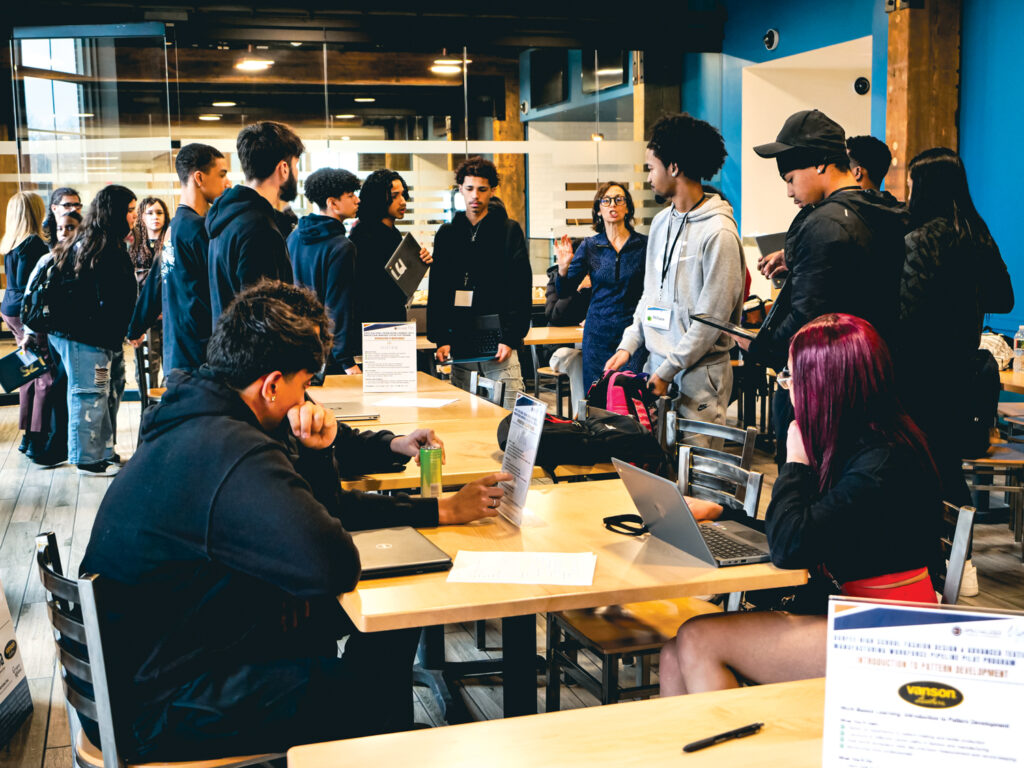
“The goal is that they can go into some type of business and potentially be an assistant or intern,” says Henderson.
Students who take the course expecting an easy “A” grade are in for a surprise; it’s a rigorous class, beginning with the basics of textiles and ending with a student fashion show.
“It starts off with introductions to fabric, threads, weft and warp, sewing needles. You teach basics in terms of construction and terminology. So they learn the different types of stitches, single needle, topstitch and different finishings. They take yarn and build the base of different fabrics through different weave patterns. It then graduates to patternmaking and draping and then some designing.”
While the hands-on work in the class is fashion-related, Henderson teaches students that there is a wide range of other fields in the industry to explore, such as defense and technology.
Another leader in education working to help students find a career path is Judi Vigna, the CEO of Specialized Career Guidance LLC in Plymouth, Mass. With more than 20 years of experience building collaborations between schools and industry, she’s spent the past eight years leading efforts to create workforce pipelines that connect students with real-world career opportunities.
According to Vigna, middle school might be an ideal time to introduce students to the textile industry.
“Middle school is often the point where students decide whether to attend a career vocational technical education program or a pathway program in or out of their district,” she says. “By introducing them early to the textile industry, they can begin to see opportunities in advanced textile manufacturing, fashion design, or even in areas like business, accounting, marketing, engineering and facilities management that they might not realize are part of the industry.”
When they are older, students might benefit from textile manufacturing careers and training opportunities.
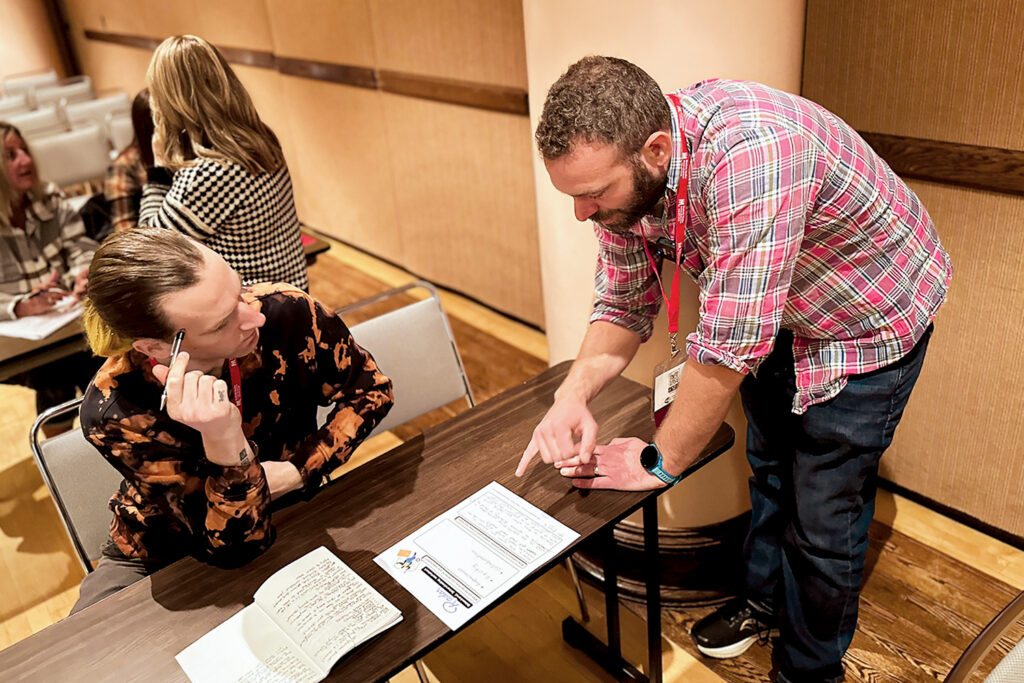
“Students can build both technical and transferable skills,” says Vigna. “On the technical side, they gain exposure to advanced machinery, production processes and digital tools that prepare them for careers in modern manufacturing and design. At the same time, they develop problem-solving, teamwork and communication skills that are essential in any industry.”
Vigna cites the example of a high-school student whose skills came to the attention of an employer during a work-based learning placement program.
“The employer created a new role in the warehouse for him to apply his problem-solving and process-improvement skills to make operations more efficient,” she says. “The student accepted the position and began his career directly after high school, showing how these opportunities can translate into real pathways.”
On the other side of the equation is the need to connect employers to qualified workers. Vigna encourages businesses to take steps to reach out to schools.
“Start small, but start,” she says. “Open your doors for a tour, offer to speak to a class or host a short hands-on activity. It is also important to connect with the right school leaders, such as the high-school principal, student services director and cooperative education director, because leadership is key to building lasting programs.”
Attracting candidates
Companies looking to fill positions immediately, of course, need quick solutions. Adam Rosen, CEO of Radar Talent Solutions in Minneapolis, Minn., advises businesses to actively post on job boards to find employees.
“This is where people are going to look for work,” he says. “It is both very easy to get a lot of visibility, and then it is overwhelming with how much visibility you can get. What a lot of our clients say is, ‘I don’t go on Indeed because I’m going to get too many applicants.’ You have to change your mindset. We work with them on filtering mechanisms, making sure they understand exactly what they’re looking for. But the single best way to meet people looking for work is to be on those job boards.”
Rosen is working with the Advanced Textiles Association Workforce Development Council to further develop the Workforce Toolkit, which provides employee recruitment resources. Right now, he is creating a way to track employers’ responsiveness in the application and interview process. He says that based on his experience, some companies will likely need to make changes in how they handle receiving applications and conducting interviews.
“It is really important for employers to understand that candidate experience matters. What is candidate experience? It’s giving the candidate a good indication of what you’re looking for so that they can self-select in or out. After that, it’s giving a high level of service to the candidate. How long does it take your organization to reach out to a candidate after they apply? Are you closing the loop with candidates? Are you transparent with candidates? Are you getting them into interviews quickly? What does that interview experience look like?”
Part of improving the process is reducing what Rosen calls “friction” when prospects apply for jobs. “I want to ask employers, ‘How much friction are you putting in front of a candidate?’ I see a lot of employers who are using older software, old application platforms that require you to log in, require you to fill out a desktop-only form, require you to restate the information that’s already in your resume and require you to have a cover letter,” he says.
These factors will deter young people from applying or finishing the application process. As a result, employers must offer a quick and easily accessible application process. Those who do will receive more applications from “young, fresh minds … it keeps the trade alive,” says Henderson.
Alan Pierce is a freelance writer in Burnsville, Minn.
SIDEBAR: ATA Workforce Toolkit: Resources for employers and employees
Employers and current and prospective employees in the textile industry have access to a variety of resources in the Advanced Textiles Association (ATA) Workforce Toolkit.
The ATA Workforce Development Council (WDC) began developing the toolkit about two and a half years ago to provide association members with resources to address challenges in the industry, including the aftermath of the COVID-19 pandemic and retiring industry members.
One of the toolkit’s primary objectives is to supply employers with resources to recruit, train and retain employees. “If there are any challenges that their company is facing with employees, whether it be recruiting or retention, there might be a lot of resources on there that they didn’t even think of,” says Liz Johnson, vice president of industrial sales at Brookwood Companies in New York City, N.Y., and director on the WDC.
However, the benefits of the toolkit go beyond employers. “The intention was to help ATA member employers, but if there are people in the textile industry who want to find a job or training, then [the toolkit] would benefit them also,” says Johnson.
The toolkit includes seven sections:
• Courses & Certifications
• Government Programs
• Market Research
• Student Engagement
• Supporting Organizations
• University Based Programs
• Podcasts & Perspectives
The toolkit is a dynamic resource, with new materials added in response to changes in the industry. To suggest additions to the toolkit, contact Janelle Buerkley at Janelle.Buerkley@textiles.org.